Mary Oliver (the 1984 winner of the Pulitzer Prize for Poetry) wrote a poem about Stanley Kunitz (named United States Poet Laureate in 2000).
I would like to share it with you.
Stanley Kunitz
by Mary Oliver
I used to imagine him coming from his house, like Merlin strolling with important gestures through the garden where everything grows so thickly, where birds sing, little snakes lie on the boughs, thinking of nothing but their own good lives, where petals float upward, their colors exploding, and trees open their moist pages of thunder – it has happened every summer for years.
But now I know more about the great wheel of growth, and decay, and rebirth, and know my vision for a falsehood. Now I see him coming from the house – I see him on his knees, cutting away the diseased, the superfluous, coaxing the new, knowing that the hour of fulfillment is buried in years of patience – yet willing to labor like that on the mortal wheel.
Oh, what good it does the heart to know it isn’t magic! Like the human child I am I rush to imitate – I watch him as he bends among the leaves and vines to hook some weed or other; I think of him there raking and trimming, stirring up those sheets of fire between the smothering weights of earth, the wild and shapeless air.
Of his own work, Kunitz said:
“The poem comes in the form of a blessing—like rapture breaking on the mind.”
Kunitz was also remarkable for his courageous stance as a conscientious objector.
I read Mary Oliver’s take on him:
“Knowing that the hour of fulfillment is buried in years of patience – yet willing to labor like that on the mortal wheel.”
And I knew in that moment, that my own uncertain struggles:
attempting to understand the whole of life, and my childish practice of wishing it well,
may in time have its own fruition.
Without excuse I fell down Alice’s rabbit hole. Neither she nor her friends were there.
I was frightened.
I am not entirely sure where this all began last week, but I have a feeling that the words of Goethe were a trigger. In the title page of the book I was reading, (Centering in Pottery, Poetry, and the Person by Mary C. Richards), were his words:
“Then only are we really thinking
when the subject on which we are thinking
can not be thought out.” Goethe
This is a wonderful description of the Zen Koan: a tool intended to bring the mind to its knees, and crack it open, changing its position of perception, its perspective. According to the Zen based teacher, Adyashanti, enlightenment is only that: a change in perspective. He explains that nothing else changes, only how you perceive the world.
I was pleased with dear Goethe, but set him aside for later.
Then I chanced to read about the author Alyc Helms, while shamelessly wandering through the Internet as I looked for possible literary agents. She caught me with a fox (and I do love the fox), by listing her literary interests as: (not in this order)
Foxes
Gender Identity
Liminality – the transitional period or phase of a rite of passage, during which the participant lacks social status or rank, remains anonymous, shows obedience and humility, and follows prescribed forms.
Critical theory fanfic – ?
Fanfic (Fan fiction) is the fractal spreading of a story as it erupts from its fans. In other words, the fans cannot get enough, so they write it themselves.
Critical Theory is “a philosophical approach to culture, and especially to literature, that seeks to confront the social, historical, and ideological forces and structures that produce and constrain it. The term is applied particularly to the work of the Frankfurt School.”
The Frankfurt School is at Goethe University.
(Ah, there is his dear name, who was he, this Goethe-name of inner sanctums, of stone foundations, and library walls?) I haphazardly went to look at the Frankfurt School and found there many names (Kant, Freud, Marx, and other well known European fathers, all vetted and true).
I was already in the rabbit hole, too far down to see the sky, as this slurry of dense information spilled down on me, slick and sweet as honey.
“I need to understand all of this!” This thought arose, even while I was convinced, at the same moment, that I would soon be overwhelmed and buried. I was so overwhelmed with the extent of my flagrant ignorance of the truth, that I turned the page and began to read immediately about Kant and Transcendental Idealism:
“The doctrine is most commonly presented as the idea that time and space are just human perceptions; they are not necessarily real concepts, just a medium through which humans internalize the universe.”
Ah! Time and space! I am simply quantumly entangled with Schrodinger’s cat, right?
(Oh god, don’t let me drown.) (Remember to not ever open the box. Remember Pandora!)
This is where it ends. I am not playing cats cradle with Indra’s Net. I am a child with a kaleidoscope who thinks she can un-fracture the world with it.
The world remains fractured.
Whatever emphatic grain has caught in my teeth, I cannot shift it, I cannot spit it out. I must soften it. I move to images made of ink, film, clay and canvas. I rest in them. I must rest.
The child’s brush is blunt; its bristles are splayed from contact with dry paint cakes.
Yellow, blue, green find the paper randomly.
More often face and arms are marked with the shaman’s magic.
The pan of water tips and shaman swims.
Swimming through the trees: great kelp forests.
Feeding on swaying kelp, sweet, salty: shaman knows an umami delight in life.
Royal Geographical Society’s Brunei Rainforest expedition to Borneo Boyd and Evans
The mysteries of the forests of our world are endless. We are simultaneously drawn and repelled, I assume by the instinctual architecture of our brains; the portion that tells us to survive. One teacher addressed it as the immediate judgements that we make, before thought intervenes. We ask ourselves, at lightening speed: can I eat it, will it eat me, can I mate with it. These are the brains imperatives to keep the body going.
Our call to forest is in the verdant opportunity. It is wet, full of the possibility of food, and provides shelter. It is also dark and full of things looking for their own meal. Take your choice. No wonder it is also full of magic, how could it not be?
Once, I had the good fortune to stay at an ancient farm and hall in Derbyshire (UK): Highlow Hall, built in the 16th century on land owned by the Eyre family from about 1340-1840, just south west of the village of Hathersage. It is a notably ‘White Lady’ haunted site.
Though I was blissfuly unaware, in the three times I stayed there, of any sense of haunting, two strange occurrences remain with me. One of them was just down the road in the trees surrounding Dunge Brook. The other I will save for another time.
It was not a particular happening, but a strong experience none the less. I am very fond of trees (if you have not guessed), and had agreed to a near moonless walk in the November air with my sweetheart. We took our leave of everyone, happily, and slipped in silence down the road, past pastures of sheep and into the trees. As we walked, holding hands and barely speaking, I was filled with an uncharacteristic dread. I felt that someone was peering at us from the trees and following us.
If I had been in another location on the planet, some other forest, I would have wondered if I was being stalked by a carnivore. This not really being a possibility, any longer, in Derbyshire, I tried to ignore the persistent rising of my hackles. It was when my very solid and unflappable friend turned to me and asked:
“Do you feel like somebody is watching us?”, that I calmly nodded and pulled him with me back to hearth-light and comfort.
The sense I took away from this feeds this story. So here is the Fifth segment.
Part Five: What May Enter Here
Ella was periodically aware of the cold and of the pain in her feet, but the awareness would fade and there was the walking, or the skipping, followed by the dancing to distract her. She smiled until it hurt to smile and still her lips stretched. It pleased her to be laughed at and disturbed her that they barely touched her, even in dance. They were so radiant, so lovely, and she felt their scorn like a brand. In time she stumbled and her knees would not unbend, so she was dragged to the edge of the clearing by her arms, where she folded in on herself like a wilting flower at days end. They left her alone, but she could hear the sounds of their revels and the relentless call to return to them.
A long time passed, it seemed. She was not present when a foot kicked her side; no one responded. Much later she smelled water and her parched body reached out when a still faced servant placed a cup to her lips. She could not be grateful, she had forgotten how. Now, someone small knelt at her side. She glanced at the not-human face, then quickly glanced away to prevent the rising questions. Too much, too much. A soft hand brushed her face and she looked again with a sigh of resignation.
“Can you stand?” it asked.
She pulled her will into a single hot place at her center and pushed her body up by way of answer. The creature grunted approval and helped her stand, though it was a head shorter at least, it was strong. She guessed it to be female from its robes, but she could give this no further thought. Its paw-hand stroked the air around them, pulling light in streams down, around, and over their bodies. ‘Glamour’, Ella thought; a thought that fell like a leaf from her mind. Together they navigated the revelers as a ship in a storm, moving first right then left, holding steady, or still, for moments on end. At last she was pushed over the back of a sturdy small pony, somewhere in the trees. She had ridden as a child and the normalcy, of pulling a leg over and hugging a rough and smelly pony’s neck, felt safe and good. Her savior made another satisfied sound from near the pony’s head, and began to lead them away.
It was slow work, but they did not pause as the dark forest unfolded around them. Ella’s full effort was required to stay awake and seated on the pony, if seated is what you would call her horizontal embrace. Now and then her sweet new friend would make a sound of comfort, to remind her she was not alone. Ella did not cry tears, but a soft moan would, occasionally, leak from her like blood and lymph from a shallow wound.
At last another’s strong arms, someone much larger than her savior friend, carried her to a low bed in a room warmed and lit by fire. An old woman, who looked, or somehow smelled familiar, tipped a cup to her mouth. She did not want it, but the drink went down warm and strong anyway, taking her away, far away from dreams and pain. She slept.
Todd arrived when the fire was down to coals, thrusting through the doorway at a run; he fell to his knees, his face a mask of fear. Behind him followed the old woman; tall, controlled, arms folded within her long sleeves. Only the depths of her eyes echoed his disruption.
“She sleeps Todd, she lives.”
“Am I to be comforted by that?” He leaned in to gather up Ella’s hand in his, not looking once to the woman behind him.
“Don’t discount it.” Her tone was harsh. So was his.
After some time he turned his head and met her eye. “Piece by piece they destroy us? Who is next, Lady? Your grandson? Your self? Your consort is weak and can not come to your aid.”
“You may not judge him!” This had struck a nerve, but Todd sought truth here, not advantage.
“He is not wrong,” came a husky voice from the doorway. The woman spun to face the speaker with a sound of frustration. Todd shook his head, then gently releasing Ella’s hand, stood to face the door as well.
He was half a head taller than his wife, gaunt, in robes cut for a younger, fuller, figure. He moved forward slowly, a rune-incised stick tapping the floor beside him: once a seal of his power, now a support for each uncertain step.
“We must not act too soon, this I know. We must bring an absolute end, not a temporary one.” She spoke to them both, ignoring what had been said and could not be unsaid.
“They see us as weak and take whatever they wish.” Weak he might be, but his mind was clear and his assessment sharp
“Unplanned furry will destroy our advantage. They are counting on that. Do you think this was an arbitrary act of hatred? They watch you, Todd. They know you. They fear us and wish to undermine our power, as you say, piece by piece! You think I did not wish revenge, Todd!?”
Todd dropped his head at this, moving his gaze back to Ella. Then he shook it. “No Lady,” the sound of him, now resigned, “I do not think that. I cannot see your plan or understand your mind. Guide me, if you wish to advert mayhem. My last reason for anything else lies here before me and I can not even assess the damage done to her.”
“She lives, Todd. She is strong, and I believe she is far more powerful than any of us know. What human has made this journey, walked this path, and still lived?”
Todd nodded, his face porcelain, but calmer. “Where is Culley?” He asked softly.
“His teacher is fetching him. She was the one to find your Ella and bring her to us.”
“Then I owe her much.”
“You do.”
“And yourself, Lady. I thank you.” He swiveled now to meet her eyes and confirm his sincerity.
“I wish us to unite for the power it will bring.” It was explanation and question at once. Todd could not remember a time when this woman ever pleaded for anything. He paused to consider what imperative this foretold.
“I gave liegence to your grandson. You must know that.”
“I do. And I thank you Dain-friend. I honor your council and your goodness.” These words were new too. Todd looked to the Consort who smiled vaguely and shifted a shoulder as if adjusting his robes. This was followed by long silence in which a coal cracked and fell. A soft sound from the bed brought them all to attention.
“Todd?” Her voice a whisper, she touched his leg with a fingertip. Todd dropped to his knees beside her again and cradled her bruised cheek tenderly. She sighed and closed her eyes. From where he knelt he could see her ravaged feet, salved but left uncovered and unwrapped in their rawness. An explosive heat rolled through him. The old couple drew closer, leaning against each other. From beyond the room, a heavy door fell closed and the sound of running feet grew near.
“Mama!” Culley moved from the doorway to his mother’s side like a wind, brushing the others away. Todd shifted and stood; Ella barely opened her eyes, but watched her son with alertness.
Culley’s teacher followed, crouched next to Cully and took Ella’s hand. “She is brave and strong, boy. We are proud of her.”
In another swift movement, Culley stood and pressed his crumpled face against Todd’s shirt, wrapping his arms around him hard. Sobs broke and fractured them all. They moved as a group, one shuffled step in closer. Todd wrapped his arms around the boy, thinking ‘Dain-son, heart-child’, and lastly, ‘clan-weave’.
The light in the room shifted, the fire seemed to have faded. The old man laid a hand on Todd’s shoulder, the other arm around the woman at his side; she, no longer Regent as much as wife, mother, and grandmother, reached down to take the knowledge-weavers free hand. Gently as a breeze, Ella slipped her other hand out to wrap Todd’s ankle.
Tendrils of light woke from the air, weaving, rising, connecting the raw intention, the clear knowing of something so ancient and so powerful it had no name. Todd breathed it in like salvation, in red gold, coppery strands. Culley looked up at him, open mouthed in wonder as the group morphed in a slow melting shimmer, vibrated and then reset, as if untouched.
The no longer old couple stood back with a gasp, fey youth, which deep sorrow had drained away, was restored. Culley stood inches taller, and his teacher, though seemingly unaffected, crinkled a smile of knowing on her eldritch face. Best of all was Ella, rising up on her elbow to smile at Todd and shake her head with her own wonder.
“Yes!” Their Queen shimmered in her power. “I knew there was something I could not grasp about you Todd.”
“And what is that, My Lady?” his voice weak in the aftermath of the power that had shifted his world.
“You wield love like a sword.” Her voice shook in awe and tendered a charming sweetness.
Her consort chuckled to himself. “We must not let them see”, he told them grinning, in the voice of a delighted child.
“Yes, a glamour!” The Queen swiped the air with a complex and powerful gesture, returning them all to their former appearance. “Return to your rooms, we will gather in the morning.” Her smile was beatific.
The Consort tapped his way to the door, a bit more quickly than he had entered, stopped at the room edge and leapt into the air, clicking his heals together. Tossing a grin over his shoulder, he departed, his tapping sounding down the hallway. The other three left behind him, arms linked.
Alone at last, Todd examined Ella at length (her whole length, should it be told) and found nothing amiss: bruises healed and delicate feet, smooth.
“I am so sorry for this.” He told her at last, as the fire flared to new wood laid across the coals.
She looked at him with her head tilted. A speculative look, which he knew from watching her art making. She would consider the materials with a slightly open mouth, as if listening for their own inclinations. It made him feel, somehow, ready for her touch, willing to be remade into anything of her choosing.
“Let us set sorrow aside, for now Todd.” She smoothed his hair from his brow, causing a shimmer of light in the room that neither noticed. “In this moment there is only one thing, and I refuse to turn away from it.”
One of the reasons that I love lush forests is the desert. Contrast is a door to mindful discovery. Our minds look intently at that which is different from our own familiar. In the desert the destination of the road is obscured by distance, in the forest the road may be only a few feet ahead and behind. In either situation my heart cracks open and I see with those eyes, heart-eyes. I love it all in the moment.
On the other hand, I love to peruse maps for the opposite reason; rather than living in the moment, I live in anticipation of discovery, even if it is not accurate in any way. The maps of early explorers were like this. They were full of foreshortened coastlines and names that implied precious metals and gems. Not to mention monsters and a frightening unknown.
The Polish poet Wislawa Szymborska (1923 – 2012) writes a nice bit on maps and their perfidy. She was the 1996 Nobel Prize winner for Literature. (But let us NOT overlook her translator Clare Cavanagh who made them seem to be written in english, just for us. Otherwise I might never have seen her work and been so moved.)
MAP Wisława Szymborska
Flat as the table it’s placed on. Nothing moves beneath it and it seeks no outlet. Above—my human breath creates no stirring air and leaves its total surface undisturbed.
Its plains, valleys are always green, uplands, mountains are yellow and brown, while seas, oceans remain a kindly blue beside the tattered shores.
Everything here is small, near, accessible. I can press volcanoes with my fingertip, stroke the poles without thick mittens, I can with a single glance encompass every desert with the river lying just beside it.
A few trees stand for ancient forests, you couldn’t lose your way among them.
In the east and west, above and below the equator— quiet like pins dropping, and in every black pinprick people keep on living. Mass graves and sudden ruins are out of the picture.
Nations’ borders are barely visible as if they wavered—to be or not.
I like maps, because they lie. Because they give no access to the vicious truth. Because great-heartedly, good-naturedly they spread before me a world not of this world.
Where sunshine flecks the green, Through towering woods my way Goes winding all the day.
Scant are the flowers that bloom Beneath the bosky screen And cage of golden gloom. Few are the birds that call, Shrill-voiced and seldom seen.
Where silence masters all, And light my footsteps fall, The whispering runnels only With blazing noon confer; And comes no breeze to stir The tangled thickets lonely.
Lake District, UK
I was moved by the feeling of Mr. Sassoon’s forest. It returned me to the mystery I find in the woods. This in turn led me back to another segment of my urban fairy tale.
“What May Enter Here” : Part Four
Where Sunshine Flecks the Green
The summer neared its close and Todd had been careful and circumspect in all his visits. It was nearly a year since Culley had begun his journeys to that other place. I wondered if I had somehow offended Todd on the day I think of as ‘The Art Class’. I certainly did not have the skill to make such a judgment and I could hardly ask Culley “have I made Todd angry?” It would sound ridiculous and only confuse him in the face of my uncertain relationship with his father’s family and all the Fey for that matter.
It had seemed such a pleasant encounter. He showed humor of a level that surprised me with its intimate understanding of some portions of our culture, juxtaposed with a complete and utter ignorance of other aspects. He was gentle and courteous about my own ignorance as well, which is vast. I feel so unprepared to interact with anyone of his world, or of my own if I am to be honest; Dain and I were separate from any of them, either mine or his. We made our own world apart.
Today I found the fox on my porch, when I returned from the store. I knew there was something wrong at once. The clothes I had supplied him were mostly scattered beside the hen house, the feed bin where they were kept lay open. The shirt remained where it had caught and torn on a hinge. He wore only the trousers and he was slick with rain. It had been a misting rain that came early and I assumed would be burned away by the sun before noon. I did not see him at once. I had pulled up and began to gather the shopping bags from the back of the auto when I looked up to see him, off to the side of the porch, hunched as if awaiting a blow.
“Todd?” he did not speak, but only looked at me from beneath his brows. A look that caused fear to rush up my spine. Still I could think of no reason for any problem, so I acted with a polite manor to set him at ease, if not myself. Nothing is normal in this life I have chosen. “Come in,” I told him, “I have to put away this food and then I can make us tea.” He stood in a near mechanical way, for a creature so normally graceful. I tried and failed to quell my anxiety as I led him in.
I shoved milk, butter, and meat into the refrigerator and turned to face him, the question on my face beyond recall. In one step he wrapped me in his arms and laid his head against mine. He held me hard and I answered him in kind, feeling his sorrow. Then the question struck me hard.
I pushed him back and asked, “Is it Culley?” Terror staccatoed my heart so suddenly that I could not breath. A flicker crossed his face as he realized my confusion and he rallied himself.
“My foster mother Mora has passed. I had no other place to go.” He seemed ragged and tired. Grief I understood and I nodded closing my eyes for a moment of recovery. He seemed inclined to speech now, so I took his hand and waited. There was more than grief here. He was despondent and there was a barely held fury as well. “She asked me to prevent them, but they took her. They have their ways and care not for any other choice. They will burn her remains and dance and laugh pretending to honor her.” He panted with his outrage, unable to go on. I squeezed his hand and he nodded. “They held me aside like some churl! I fought them, but they knew and came with many and with weapons. They laughed.”
I could see the bruises now on his arms and chin. He had fought them hard. I slipped my arms around him and laid my head against his skin, strangely aware of the scent of cinnamon. We stood like this until I heard his heart and breath slow. He continued.
“She asked to be buried in the wood by my family’s grave, where the sun finds its way at end of day. I promised her.” He looked into my eyes with a pain so full that it washed through me as well. I held his eyes, incapable of words and he shuddered and then bent to my lips. In ways I do not know, we made our way to my bedroom and to my bed. I had forgotten touch, forgotten the lost sense of boundaries. The confusion of who is toucher and who is touched as you are convinced there is only one joy, one longing, one heart brought into being.
We slept and woke to touch again, returning to sleep and woke and slept yet again. It was as if we had fallen into a dream, a cycle of moving together and then not quite apart. The sun moved to play patterns of leaves against the wall. I heard the screen door slam. Culley!
In my blue robe, its sash knotted firm against me, I pulled open the door to my room. There stood Culley, smiling.
“Hello Mama.”
“It’s not…” His direct gaze froze me. Never had I spoken less than truth to my boy: the being of my heart. “I want…” I began again, feeling helpless to find a word that would not make me cringe. My child saved me.
“You want me to know that you love me.” I nodded. “I know that. I want you to be happy.” He paused and watched me with a guileless gaze that I had never questioned, and still could not. “I believe you are.” He ended softly and left me without voice at all. Behind me, the door opened wider and I cast a glance back to see Todd clothed only in my blouse, knotted around his waist: a floral voile of less than useful translucence. I covered my mouth but not in time to stop the snorted laugher. Both men (for man my son had become) looked at me with incomprehension. I simply shook my head, letting go of any need to explain.
“Todd.” My son’s voice rose in volume and clarity. He seemed taller and older, and I knew this to be a glamour of sorts. “You are welcome here: all entries, posts, lintels, doors, windows, of any kind will let you pass. You are held as friend and family in my home. Here you may find protection, anonymity, support and succor. Only ask.”
Todd had dropped to one knee as Culley spoke. I felt strange and appalled, but somehow right as well. “I thank you my Lord Culley.” Todd’s voice rang out with similar clarity. “With all my heart I pledge troth to you and yours. If there is work or council or aid I may give, you need only ask. If a day comes to take up arms, I will stand at your shoulder.” A thread of fear chilled me with these last words, though it all seemed only formal.
Now Culley grinned, all little boy. “Just ‘Culley’ at home Todd, please rise.” He turned back to me as Todd stood. “I realize you had already given permission, Mama, but there is a formula that must be met, if the protection charm is to stand firm.” I nodded, still mute. “Todd, my grandmother sends her greetings. She promises that todays’ outrage will be met in kind. Both you and my father will be avenged.” There was a silence we all held at these words. Then my boy seemed to deflate, and to transmute himself back into ‘boy’. “When’s dinner? I’m starved!” He turned and clomped boy-style into his room, where rucksack fell and books were ruffled and the sound of the bed being flopped on put to an end to things.
I turned to look at Todd who showed me a face of amazement and a growing smile. Gently he reached for my hand and drew me back into the room, where we took a peaceful moment or two before retiring to the kitchen to prepare ‘Lord’ Cully’s dinner.
I have grown used to waking to a tangle of limbs and easy caresses beneath my covers. Sometimes I find a fox, wound tightly on top the coverlet, tail tip over eyes. If I have the bad sense to tickle him then, sometimes I sport a painful nip. I return it later.
I do not know what the future holds, but the ‘now’ has resolved itself nicely.
I sat upon my haunches in the early morning light. There was no need for me to be here. The boy knew full well his way and the way was short. No, it was not responsibility that drew me nigh, and not the boy I watched for. For a creature like myself, curiosity is the greatest flaw.
The lights came on in the small clapboard house and I stood leisurely, stretched, and trotted off to the nearby enclosing clump of trees. There, I lay down, chin resting on paws, so that I might watch unseen beneath the leafy boughs, which nearly brushed the ground. It was a fair day and eventually all the curtains were opened in the house, presumably to let the sunlight in. I knew the woman’s habits well and watched with a unsettling delight as she moved from room to room, ending up in the kitchen, moving deliberately, moving with an economy of effort, while keeping her carriage tall.
I tried to see her beauty, but was unsure of what I saw. Dain had loved her enough to risk everything he had been raised for, and I had most certainly loved Dain, my only friend. I wondered what the flavor or scent of this human woman had been to capture the heart of a Fey man, but Dain had never been ordinary, had he? Fey or not, he had bent every rule made; becoming friends with one such as I, had been only one of them.
Culley left at his appointed hour, carrying a lunch and shifting a rucksack over one shoulder as he turned to wave to his mother. I held still as a stalled breeze, as he passed, but Culley spoke “Good Morning Todd” softly with a smile, while seeming to look straight ahead. I smiled back, my red tongue escaping for a moment. I found it easy to be myself around him. The boy was defiantly Dain’s child in so many ways. I had met Dain at about this age. He was the first child of any kind I had met, my adoptive mother having rightly judged my safety to outweigh social interaction.
Mora was already old when she found me, late in the night, mewling and whimpering in the back of a blood soaked den. Herself a victim of Fey power maneuvers, she guessed my plight and hid me away until she deemed it safe. Neither she nor I have ever gleaned the truth, even Dain’s endeavors in the lofty world of his family led to nothing. My mother was killed by an arrow; the other kits were easily dispatched with something blunter. I have no strong memory of it, only a time of terror and hunger ended in Mora’s arms. She gave me food and a bed and in the morning left to bury my family. I did not see the arrow she had preserved until I was 16 and she told my story to both me and Dain.
My kind have no name, I have met no other like me, nor had Mora. The word “Todd” simply describes “fox”, which Mora called me in the years before my first transformation at age 4 or 5. My bipedal form holds no name, nor do the other forms I may possess but which have not yet arisen for me. I still live with Mora, but since Dain’s passing I trust no other. I am now well known for my skills in parlay, I am held in trust by the highest in that land, but that trust is not returned, for I must believe one of them ended my family. I watch their eyes and I wait.
Today is a different sort of inquiry. I give Ella another hour before I rise to announce myself. Trousers and shirt are stored in the feed cupboard by the chicken coop, by previous agreement. The hens have grown used to me, which I find irritating. One day I may reeducate them about this fox. I smack my jaws wetly, snuff the air, and fantasize choosing the brown one. Strange to raise them only for eggs: a waste. The clothing is soft; the trouser seams are bound down on the inside, so they will not rub. She chose this for me when I tried to wear Dain’s hard blue pants the other way out: its seams were unbearable! Ella says I am wearing clothing made to sleep in. I asked her why anyone would sleep in clothing and caused her to blush. I am as rough and graceless as a stable boy in this world, at times. We have both learned to laugh at our shared ignorance. Laughter heals, a truly universal magic.
I press the button, which rings a bell. I delight in such things, still appalled at the easy magic these creatures have mastered.
“Todd!” Is she pleased, surprised, or unhappy? I cannot decide. “Come in. I was planning to work today. Would you like to have tea in my studio?”
“I have always wondered about the art you make, Ella. Thank you”, sometimes I am too blunt, but she seems unfazed by my expressed interest, which I judged to be remarkably rude as it left my mouth. Her smile seems genuine. I pretend I am Dain for an instant, to understand what called him to her. Immediately I falter, it seems too offensive. I am ashamed and silently ask Dain’s forgiveness before entering. I have no shoes to shed at the door, but I wipe my feet and she waves me into her inner sanctum.
“Go ahead and look around, I will fetch the tea things.”
I cannot even respond. It is by far the largest room in the house, with the roof as high as the second story. It appears to have been built on at a later time. The windows are notably different; large and unframed. Daylight sparkles across the room and brilliantly lights the paintings, and other stranger things hung on every wall. Canvass and oil I understand, but natural wood melded with glass or metal to create lifelike forms, is beyond me. She finds me slumped in a padded chair, my head back, my mouth open, as if I had been tippling.
“I had no idea. Dain never said. Is it done with magic?”
She placed the tea and food on the table while trying to control her face. She did not want to laugh at me.
“Your complements are far too much for my simple work. I thank you,” was her controlled answer.
She sounded so diplomatic and proper that I burst out laughing myself and she joined in. “Truly, I have never seen art of such shocking beauty and intriguing concept. Perhaps I sound like a fool in your world, but I am not given to flattery. Have you noticed?” I ended with this, in an attempt to disarm her and return to some sort of more natural conversation. It worked, but I was still over awed by the plethora of creation around me. We poured tea and I asked her to take me piece by piece through her work. It took over two hours. It was marvelous.
At last we sat, the teapot empty, and I had no more contrivances that might allow me to linger. The day was passing and I could feel her desire to return to the work that was her livelihood.
“Thank you Ella,” I spoke simply as this was all I had. Her responding smile was radiant. I could hardly look at her. She cast no glamors; that I might have fought. It was in her pure unsullied honesty that I might drown. In horror I knew this is what it had been.
Eventually I set aside what I am reading and write. It is best, or so it seems to me, to arrive at writing from a place of stillness. There is depth in such writing. I recognize the depth because I have the sense of someone else there doing the work; it arises and sets itself on the page, then I show up and do some useful editing. This is ordinary magic, there is no effort to do anything.
The following bit is the start of a fairy tale. There seems to be a fairy tale need in me these days. I have been re-reading Joan Aiken and she has that effect on me. This is only the start of one, so be patient with me please. It has been a while in the making.
Look a Little Deeper
So, I knew this man once, who came home looking for his lover, but she had run off.
Run off with the butcher’s wife? No, no, just… off somewhere. She had something to do. When he left that morning she had been looking for her shoes, so he had had a hint.
It wasn’t that he was worried. They had always, so far, been good lovers: sweet and constant. He wasn’t worried that she wouldn’t come back. It was more about who would she be when she did get back? She had the tendency to be, well, perhaps a little extreme, sometimes. Once she had come home with a saxophone and a saxophone teacher. The three of them had lived together in the same bed for 4 months. The saxophone teacher was very nice, if a little young, and she made very good eggs at breakfast. But then, he had never liked saxophone very much and it really was a very small bed.
So, he was actually, just a little worried and slightly curious about what happens next, (aren’t you?)
She had first arrived one evening as he sat outside his flat. It was summer and hot; he turned off everything and opened everything and sat outside in the semi-dark drinking beer. She was selling flowers, or at least that is what he decided. She knelt before him in a brown gathered skirt and a white men’s shirt rolled up at the sleeves and tied at the waist. She looked into his eyes and smiling happened. He was taken in that moment. For all his life after, he thought of that twilight moment as the hinge of everything: of all happiness and certainty.
She pulled a cloth from her pack and spread it at his feet in the dust of the walkway. She did it with the flourish and poise of an entertainer, every once and a moment catching his eye.
On it, laid out in a single motion, were flowers made of everything; of wire and paper, bits of metal and plastic used with incredible delicacy; puckered, bent, crimped into authentic flowerhood. He stared at them, feeling his mouth fall slightly open. She tilted her head as if to ask what he thought. He bought everything she had, with everything he had; 17 pounds, 22pence. He offered her a beer and she stayed; to his everlasting amazement and curiosity.
Gary was one of three Gary’s in his class at school. It was a popular name that year. It was the only thing that was popular about him. He was a quiet boy who did what he was told with good will. It was for that reason that his teachers never remembered him, and his parents seldom did. He was not a squeaky wheel and if he earned any attention it was usually a sigh of relief, that at least one child in the bunch was not causing trouble.
Gary decided at some point in his education that what he wanted was to be a success. He was not sure how this was accomplished, but he determined from the subtle comments of his betters that it was by diligence alone. Therefore, rather than go on to school, at 18, he decided to follow in his father’s footsteps and make the family farm a great success. He approached this with abundant industry, the afore mentioned diligence, and, his father’s somewhat skeptical blessings. He was the eldest child, after all, and the only son, so it stood to reason, and his father was not a man to stand in the way of hard work. It was on the day after Gary cut the tips from three fingers of his right (and dominate) hand on what might be considered ‘complicated farm machinery’ that his father took a different view. Gary came into his mother’s kitchen, bleeding extravagantly, but quietly. Jeannie who came weekly to help around the house, and who was one but not the other, made up for any silence with memorable expletives and a full length passing out in the doorway. His mother treated him with a constant headshake. After his hand was wrapped, his father stood and looked at him thoughtfully, fists shoved into his pockets, mouth pursed and his headshake at the same cadence as his mothers. Gary remembered thinking that his mother and father had lived together a very long time. His father’s head abruptly stopped its wag and his lips un-pursed. He looked into Gary’s eyes and said “So. Son. What is it you think your calling might be?”
Gary went away to school.
By the time he met her, there remained only a strange bevel to the tops of the last three fingers of his right hand. She said her name was Jezz, after Jezebel. She said her mother liked the Bible.
Gary was shocked and incredulous. “But why name you after that story?” he asked.
Jezz smiled sideways at him. “I said she liked the bible, I didn’t say she’d read it. I think she picked names from it at random to name her children, and her dogs for that matter. You need to meet my brother Judas.”
Gary winced, but said nothing and Jezz smiled widely.
“He calls himself Jude and tells people his mother liked the Beatles song. I think she did, too.”
On the first sunny day after they met, they laid a blanket in a field just out of town and made love in the sunlight. This was a first for Gary, and although it was Sunday and there was little chance of being interrupted by the farmer, Gary felt somehow wicked, but not bad, not bad at all. After, they ate the lunch they had brought. Gary pulled his jeans on right away, but Jezz seemed to not think of it at all.
For Gary, Sunday had been his day of rest, or at least change, which they told him, was as good as any rest might be. As a child, he attended church with his mother, after chores and any schoolwork. It was something that he continued to do into his teens, long after his two sisters had found reasons to avoid it.
The Reverend Thornhurst was loud and fiery. Gary may have gone for the simple contrast his sermons made to a quiet home life. Shortly after Gary was born, the Reverend had arrived in their parish. He was a practical and earnest man, married to a mildly pretty woman of good family. She left him in under two years, to much local speculation. The Reverend never spoke of it, but his sermons took on a touch of frenzy (and occasionally spittle, for those in the front pew). Over the years, the many, many wicked women of the Bible were outlined in detail. Even the Virgin Mary was given a careful going over in the Christmas season. Somehow Gary associated women and Sunday. It was good to find it was something sweet and wholesome after all, just as his heart had always hinted.
Gary and Jezz stayed for some time in the field, enjoying the sunshine. Gary on his stomach watching the slow progress of life in the grass, turned to look at her. His Jezz; sitting naked and unconcerned in the sun, braiding grass stems with deft art. The look of concentration that had gentled her face, gripped him somehow. His throat grew tight and he smiled, thinking he should read the story of Jezebel sometime and see what he thought of her now.
He dropped by the first time like a new neighbor: casual, carefully neutral, vaguely friendly. A painfully bright red on the landscape, which approached my back door, then sat on his haunches waiting, toenails just barely skirting the edge of my threshold. We contemplated each other for a moment with equal curiosity. He tilted his head in foxy interrogative, then he stood in a flourish of transformation. Now a naked, tall man with painfully red hair in just a few places, I blinked several times before tossing him the tea towel I had dried my hands on. He held it loosely before him and tilted his head again.
“Come in, shut the door.” I called over my shoulder on the way to accumulate some clothing. The click sounded behind me, nothing more. If I had not been expecting him it would have been distinctly off setting. As it was, I was already sweating and wiping my face as I walked with what I hope sounded to be authority, in my own home. I returned shortly with pants and shirt from Dain’s closet. I had not touched it in 4 years, I took a breath, let it go and set them on the kitchen island between us. Todd, for it could only be Todd, whom I had called, put them on clumsily. “They suit you well. Would you like some tea?”
“Yes, please. Have you honey?”
He smiled now in a dazzle and I reminded myself that he was fey to the core and not to let this influence my mood of resolution. He was adroit and seeing my resistance toned it down a bit. I liked him for that and returned a curt nod.
“Honey it is. Please take a seat in the front room and I will join you.”
I brought in a tray to set a formal mood. I wished I could appear formidable, but knew my stature for what it was: tiny. The tray held scones, cream and jam to balance the teapot. It looked bountiful. It was a small tray. Todd’s proud carriage and dexterous, self-possessed movements were worth watching. He was a spokesman of redoubtable presence, and some fame in his own place. I knew that when I named him. Dain spoke always of him as a friend. That gave me courage and a snippet of hope. I sat a little straighter with my cup resting on its saucer quietly. This was no time for nerves. Finally, he set down the cup and I followed suit.
“You wish to Parley?”
“I do.” The following silence made me tighten.
“Is Culley here?”
“He is at the neighbors; she asked him to bake tarts. He loves sweets.” Nothing had been said and already I felt myself losing ground. My shoulders were dropping with my heart. The fox smiled again; not so many teeth this time.
“Why did you call me, may I ask?”
“Dain named you as friend many times.” I glanced down feeling too weak for this, too powerless.
“Your power lies in your love.” He spoke quietly, reading me easily. I flushed and tears rose, to my shame. “Dain was won over by that very power. Rest in it.”
I looked up at him, ginger halo caught by the sun from the window. He was watching me, but what I had anticipated as calculation had melted from his face.
“I have no idea where to begin. I only fear to lose him. To lose him, too.” Something moved in the creature’s face, something I would have known as compassion in a human, but my mind strove against it. We are such pathetic beings; tortured by our ignorance and defined by our arrogance. I held a flicker of hope then and carelessly brushed it aside. He laughed at me. I saw it and was consumed by my shame.
Contemplating my ruddy flush he spoke again, this time more gently, as if to a child. “I will not seek to manipulate you, but I am sworn to my duty. You called, I was asked, and I accepted. This is all outside of any friendship I have ever held. If it is not, it is meaningless.” He waited for my acknowledgement. I sat straighter and turned up my eyes to him.
“I asked for you because I hoped you would honor us all. All concerned here held Dain in our hearts.” For this I received a whisper of a smile. “I called for you with the understanding that the outcome would be binding. I am frightened, not perfidious.” This time I let go of an edge of my fear and smiled back at him. He somehow emitted radiance that out played the afternoon sun. Hope wormed its way back into my heart and we began to talk in earnest: to plan, barter and plead our cases.
When evening fell and Culley returned with a plate of warm tarts to show me, he looked around expectantly.
“He was here!”
“Oh yes.”
“Have you agreed?”
Ah, the simplicity of childhood; love them because I do. All will be well!
“We have. You will live with me, just as you would at regular school. Lessons begin after the summer.”
“Are you happy?” Culley’s candor was always foremost. I hoped it always would be. I smiled easily at him.
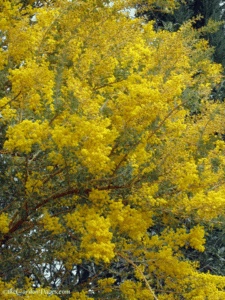
As a child, trees in our vicinity were a particular draw. It was not a exceptionally wooded landscape. There was the feeling of cultivated lands slowly being returned to their original inclinations: verdant. I would wander as far from the house as I was allowed and stand among young acacias. Their smooth grey trunks and yellow springtime fluff gave off a feeling that I cannot express even today. Their trunks were about 5 inches in diameter, I believe, and they would sway in the breeze, creating a small gap at their base as they shifted back and forth. I was small, they were tall. We had a relationship.
There were other trees I grew to know over time, but these were my first loves. I do realize I was an odd child; lonely, small, hungry and silent. Odd has turned out to not be such a bad thing. Apparently there are also the odd moments of grace in life that hardly make sense in the world of ordinary concepts.
The following story speaks for itself. As an aside, the name ‘Culley’ is Gaelic in origin, meaning ‘the woods’.
What May Enter Here
Part One
Culley had been standing in the grove for some time now, standing still. His mother could see him from the back door of the house, the land rising gradually from there and cresting with the stand of acacia trees just coming into bloom. She paused her process of baking bread every so often to check and see if he had moved. Her wristwatch had stopped yesterday and she had left it on the counter of her bathroom this morning. She made a snorting sound of frustration as she automatically checked her naked wrist one more time.
Culley’s mother slid the two loaves into the oven, checked the time on the clock in the other room, and pulled on her sweater and wellies. She tried hard not to run or to slip on the still damp spring grass. When she had nearly reached the grove, she approached more slowly: moving a step or two and then pausing to watch her child, who was far too fey for his own good. At last she came to stand by him, nearly brushing against his shoulder, carefully watching, still. At last he looked up with a sunny smile.
“Hello, my child. What are you doing?” her words as softly spoken as she could make them.
“I’m talking to the trees, Mama.”
Culley’s mother unconsciously pressed her fist up to her mouth, a look of anxiety walking shamelessly across her face. Culley had turned back to the trees, rapt.
“Do they answer you, my sweet boy?”
“Yes, but they are very slow.” He did not look away from the grove as he spoke. Culley’s mother pressed her fist against her head this time. A movement, caught in the corner of her eye, caused her to jerk her head in that direction. Her son cast her another smiling look, as if waiting to share her excited recognition of something. This time she schooled her face to stillness. Culley turned back to the grove.
“You’ve been here for a long time. It’s time for you to come home and help with dinner.”
“OK, mama!” He seemed completely unperturbed, and his mother slid her hand into his and turned him toward home. Another movement beneath the trees turned her still face to stone and she deliberately turned her back to it. At the kitchen door, Culley pulled back and let his mother remove her boots before helping him pull his off as well. She stepped inside, then turned to see him pause on the doormat. A shadow of something passed behind his feet. She looked at him as sternly as she was able, an effort on any day.
“You know the rules, young man!”
“Yes Mama,” he spoke solemnly, “house things in the house, garden things in the garden, and wild things where they belong.”
“Very good, now make sure that’s true before you step over our threshold.” She emphasized the ‘our’ only a little and not for his sake, but for the sake those who might need reminding.
Dinner was constructed from steps; meat cut into cubes and seared, onions browned, root vegetables peeled and chopped. Culley was remarkably skillful with a knife, but she had been forced to purchase the new ceramic ones. He cried when she used the steel ones and refused to touch them himself. She had donated them to a surprised neighbor; saying ceramic was safer for children. She took the bread from the oven just in time, by smell. It seemed she had forgotten to wind up the clock in the sitting room. As the bread cooled on a wooden rack, she sent Culley into the dinning room to draw while the stew cooked.
Twilight was falling and Culley’s mother opened the back door again, stepping out of her hot kitchen, this time without her sweater. She gazed up the hill with a silent stillness her son would have understood. A late honeybee lit on her flowered blouse, near the elbow. She turned her attention to it. There was nothing to fear in bees, they meant you no harm. Bees were conscientious and diligent, sometimes a bit pompous, but never unkind. If you had something that needed telling, they were here to listen with polite concern.
“I don’t need to talk about him today, thank you. It’s his son I worry for. I don’t think you can help me there.” She smiled with a touch of sad chagrin. The bee hummed for a moment longer on her arm and took flight to a home where his yellow dust was a badge of courageous enterprise. She thought of the budding acacia and wondered just how much the bees had seen.
Dinner did not begin until full dark had fallen. This was not due to a plan of any sort; it was the tenderness of potatoes for the most part, that dictated the time. When Culley had eaten his last bite, he set the spoon to the side with authority; a small clink that gave his mother warning. She waited, toying with the last bit of her bread.
“Mama, will I go to school next year?”
“I think you will be old enough.”
“Papa’s family say I should come to them for school.”
“Do they now.” Her tone was flat, her face resolved to this bitter news. “When did you begin to talk with them?”
“After the trees. They are all friends.”
“Yes.”
“They say that Papa would have wanted me to learn from them. I know you don’t like them.”
At this she looked up at her son’s face in surprise. “Not true. Your father was one of them and I have never stopped loving him.”
Culley tilted his small head like a bird listening for something. “Then why have you closed our door to them?”
His mother nodded in acceptance. This was a conversation she knew would someday arrive. Very softly she said, “Their interference was what led to his death.”
“But they did not mean to, they told me that they miss him too.”
“I have no doubt they miss him, but he was mine and they had no right here.”
An uncommon look of concern took up residence in her son’s face. With a deep sigh she straitened her shoulders and spoke. “Let the red fox come, the one they hail as Todd, and we will parley.”
With such a solemn demeanor did her son bow his agreement, for all the world as might the lord of the hall agreeing on terms. She felt the gurgle of a laugh even through her sadness, which she immediately suppressed. Both here and in that other place he might be, one day, lord indeed. She must play her part as well, and unflinchingly, if she were to protect her child from the harsh and loving ministrations of a world beyond her ken.
Meandering. Stillness and silence lead me, waiting for something to open. During mediation all sorts of things open into my mind, then float away leaving me with a sense of insights having passed through me and moved on.
Much interconnectedness, for me, is the arising of serendipity within my experiences. Not mere accidents, to my mind, but a clarity of thought that culminates in allowing me to see more precisely how the world relates, one item to another and another, guiding me to a larger perspective. Among the books I am presently reading (and re-reading) is “The Dream of the Earth” by Thomas Berry. He charmingly dedicates this book “To the Great Red Oak, beneath whose sheltering branches this book was written”.
In his introduction, he begins with:
“One of the most remarkable achievements of the twentieth century is our ability to tell the story of the universe from empirical observation and with amazing insight into the sequence of transformations that has brought into being the earth, the living world, and the human community.”
Thomas Berry
I must acknowledge that all understanding is developed from empirical observation. From there I am forced to consider how crude our human instruments for observation still are, for all our microscopes, our scanning and calculating power, we still spend much of our time uncertain of what we observe and how to interpret it. Mr. Berry looks deeply into history, the wisdoms found in myth and ancient traditions, as well as the constant dawning of understanding from scientific exploration. From this broad view he asks: what is our responsibility to the earth?
Thomas Berry describes our relationship with earth as having phases similar to those Joseph Campbell describes in his ‘Hero’s Journey’. Humanity must let go of their childhood and move toward their own coming of age, in responsibility for the planet.
Of course this is indeed a very broad view, one that demands knowledge and understanding well beyond my own. It moves me, I can see the sense in it, the understanding that he conveys, but it leaves me trembling in my own smallness; the tiny thing that hides in the grass. So, I make my great strides with the use of small words; some borrowed, some my own, but only words. Understanding the things that cannot truly be spoken of with the use of words? Yes. How silly.
Virginia Woolf attempts it in this passage from “Time Passes” in “To the Lighthouse”:
“Then indeed peace had come. Messages of peace breathed from the sea to the shore. Never to break its sleep any more, to lull it rather more deeply to rest, and whatever the dreamers dreamt holily, dreamt wisely, to confirm—what else was it murmuring—as Lily Briscoe laid her head on the pillow in the clean still room and heard the sea. Through the open window the voice of the beauty of the world came murmuring, too softly to hear exactly what it said—but what mattered if the meaning were plain?”
According to Ursla Le Guin (lovely Oregonian author of Science fiction and so much more, recently lost to us), when discussing the style of this piece, Woolf is quoted in a letter to a friend:
“Style is a very simple matter; it is all rhythm. Once you get that, you can’t use the wrong words. But on the other hand here am I sitting after half the morning, crammed with ideas, and visions, and so on, and can’t dislodge them, for lack of the right rhythm. Now this is very profound, what rhythm is, and goes far deeper than words. A sight, an emotion, creates this wave in the mind, long before it makes words to fit it.”
Virginia Woolf in: Le Guin, Ursula K. Steering the Craft: A Twenty-First-Century Guide to Sailing the Sea of Story (p. 32). Houghton Mifflin Harcourt.
Words may flicker through you and convey ‘the voice of the beauty of the world’. Ordinary magic, but magic, to be sure.
What do you see here? This was a remarkable happening, caught on camera at the end of a hike last summer. I still feel a Kaleidoscope of emotions when I look at this scene of beauty and sorrow. I feel conflicting things: a beautiful flower, a beautiful spider, duplicity, fear, death, dinner, survival.
I am not so simple as to think that any word I share here will change this world; result of limitless causes. Still, I imagine that a change of perspective results in a change of intention. My intention has no more power than of a puff of breath into the gale, yet it remains one of the causes. I long to read words that bring me greater clarity, greater depth, and hope. I long to share such words. That is all.




 The Myth of Trees